Flex
No tree. It follows the back instead of forcing it.
Categories
Browse
Tailored configuration, delivered in 6-8 weeks.
Guides and care
Assistance
Account and orders
Sign in to see your orders
The saddle built around the horse

From €1,570.00 · VAT included
Scroll through the qualities that define a Freeform® saddle, the benchmark of the treeless world.
No tree. It follows the back instead of forcing it.

Pressure spread out. The weight kept clear of the spine.

Freedom to move. Shoulders free to travel.

Close contact. The feel of riding bareback.

Modular. Every part is a choice.

Sustainable by choice. Leather or vegan, same care.
Scroll through the qualities that define a Freeform® saddle, the benchmark of the treeless world.
No tree. It follows the back instead of forcing it.
Pressure spread out. The weight kept clear of the spine.
Freedom to move. Shoulders free to travel.
ArcioneFreeform
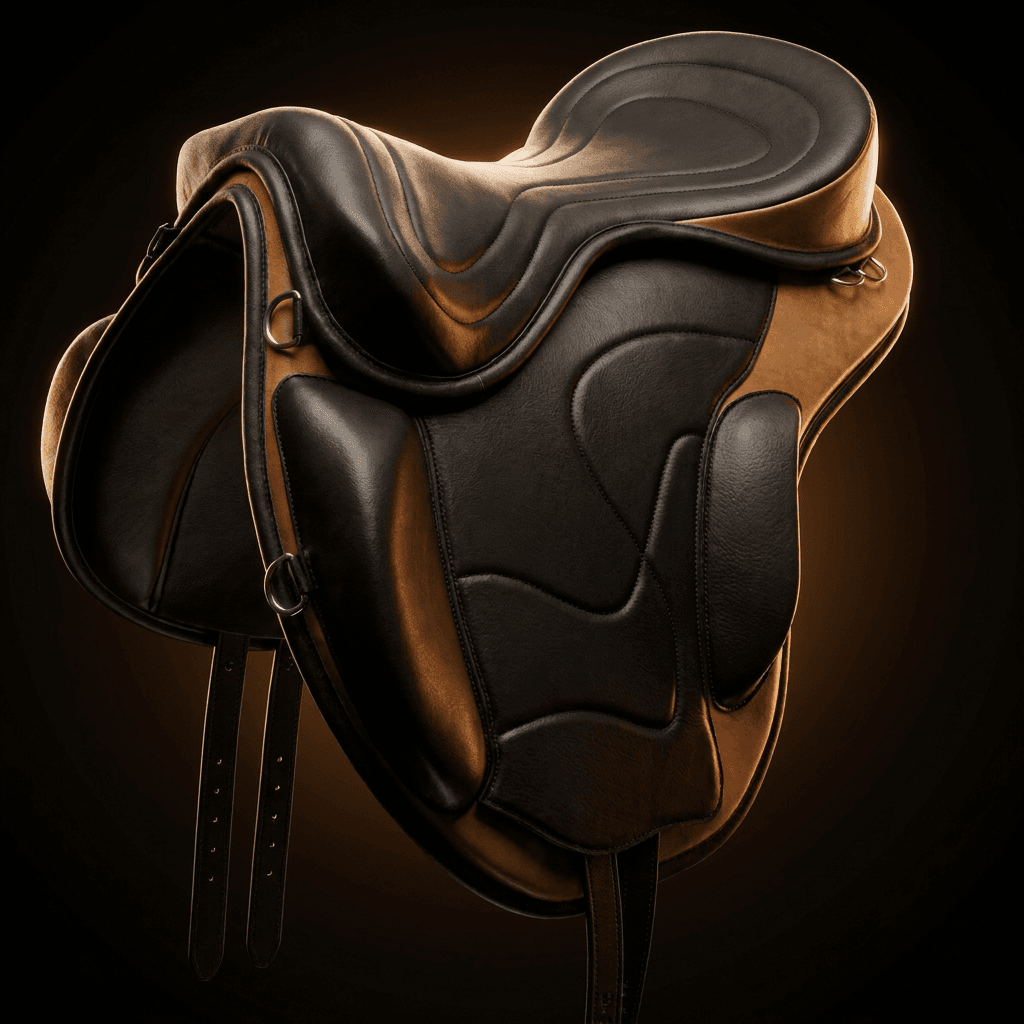
A conventional saddle is built around a rigid tree of wood or fibreglass: one fixed shape imposed on a back that never stops changing. The Freeform does away with the tree and lets the saddle adapt to the horse instead, following the shoulders and the ribcage through every stride.
A conventional saddle is built around a rigid tree of wood or fibreglass: one fixed shape imposed on a back that never stops changing. The Freeform does away with the tree and lets the saddle adapt to the horse instead, following the shoulders and the ribcage through every stride.
The rider sits just behind the withers, between the 9th and the 13th thoracic vertebra, and never past the 14th — beyond which the back is not built to bear weight. The seat bones stay either side of the vertebrae, so the load is spread well clear of the spine.
Three and a half kilos, seat included: less than half an English saddle with a tree, a quarter of a western. That is weight you don't have to lift shoulder-high to tack up, and weight the horse doesn't spend carrying equipment instead of a rider. On a slight horse, on a pony, on a youngster still filling out, the difference shows up in the stride: there is a saddle you feel all day, and a saddle that disappears.
3.5 kg
Base and seat together, in the English configuration
Weight compared
Freeform
3.5 kg
base + seat, English line
English saddle with a tree
6.5 kg
category average
Endurance saddle with a tree
8 kg
category average
Western saddle
14 kg
category average
The Freeform figure is the catalogue one. For treed saddles these are indicative category averages: real weight shifts with size, finish and hardware.
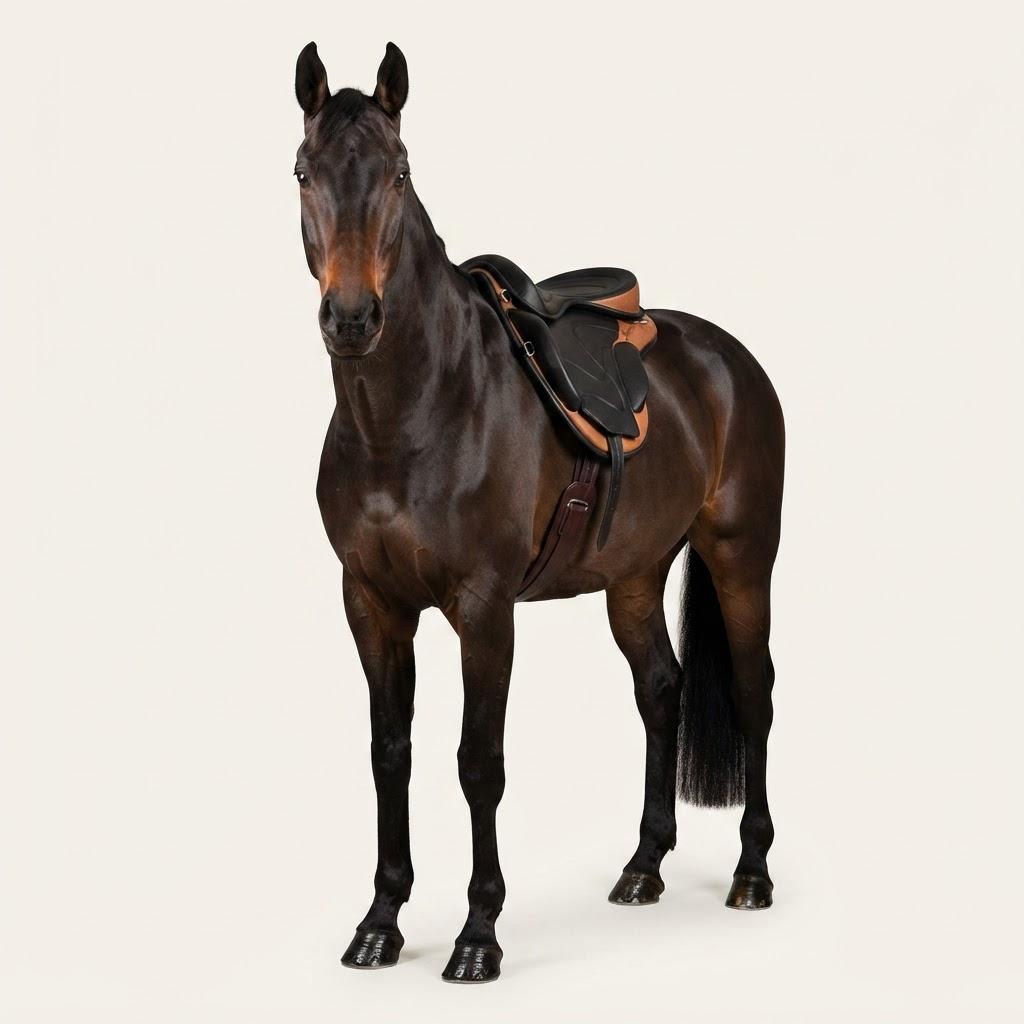
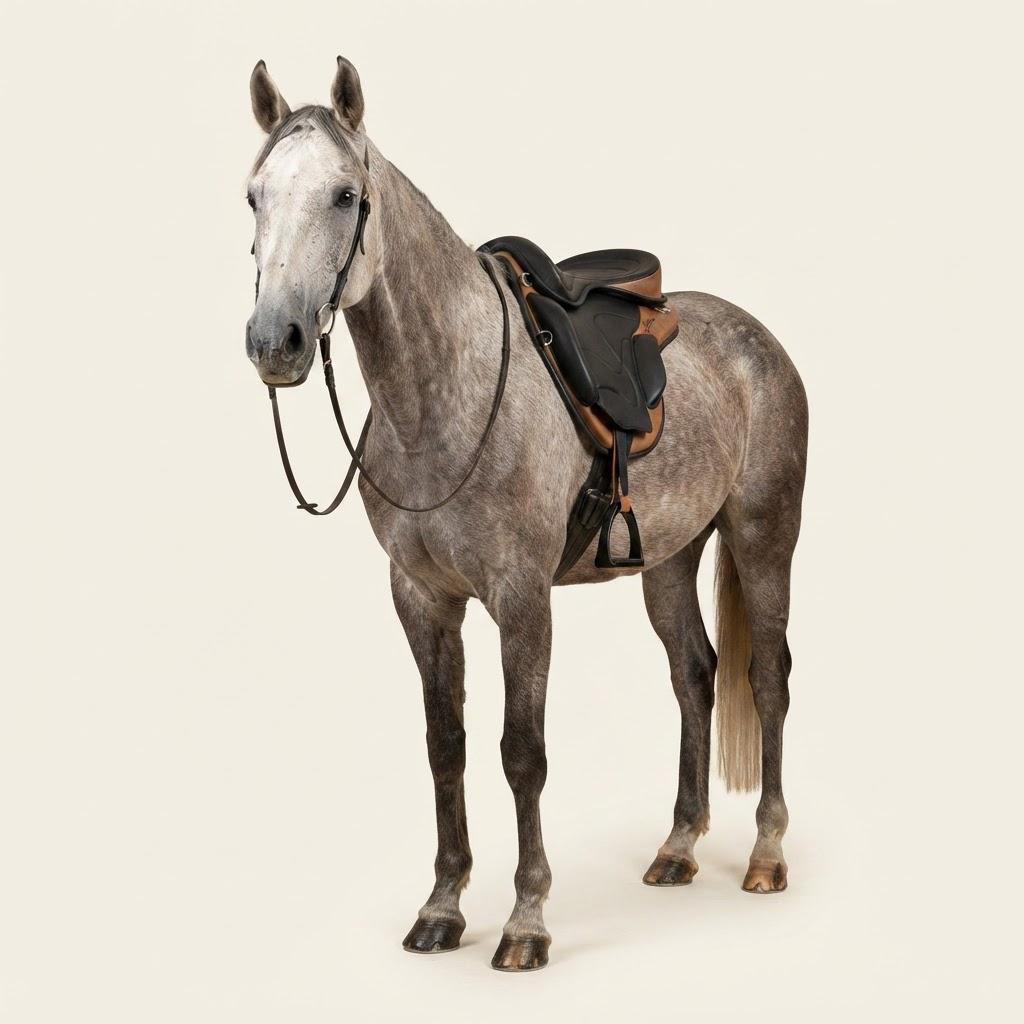
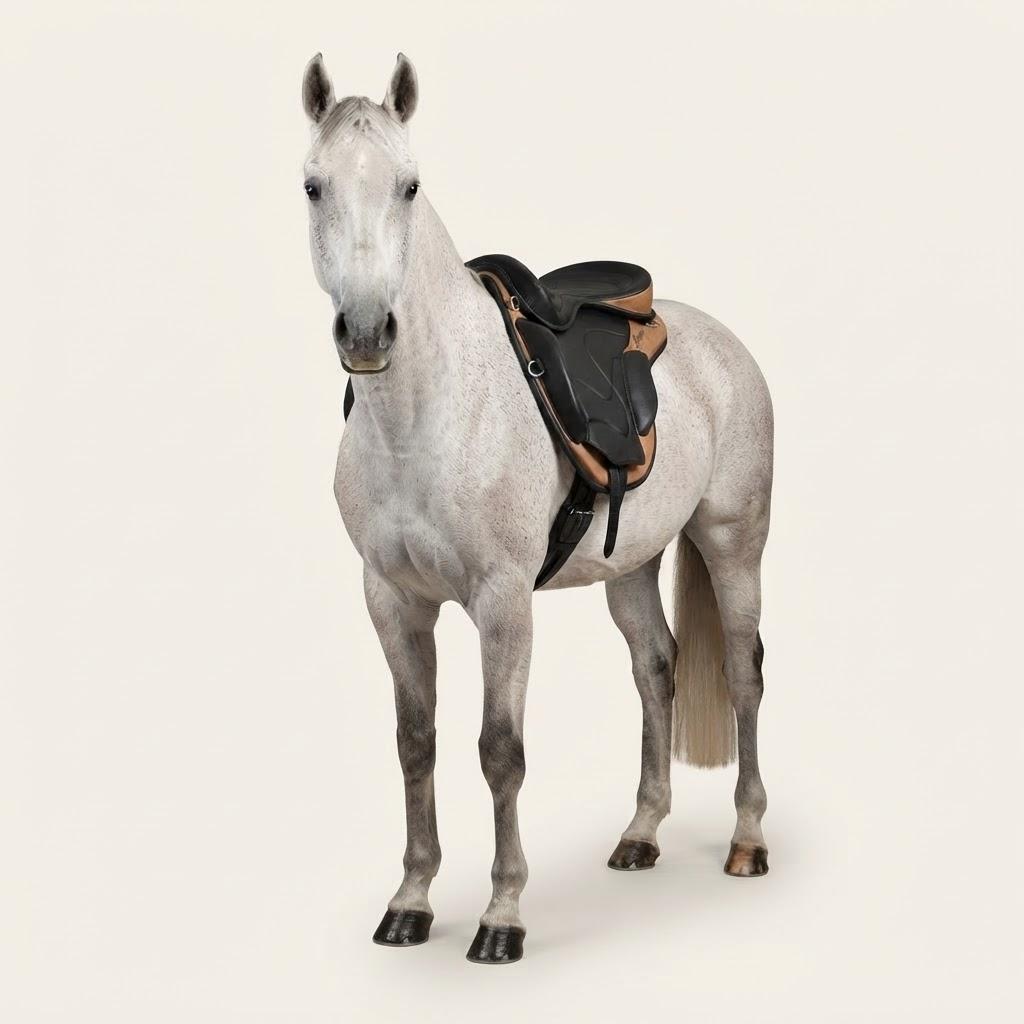
One saddle, many backs. It keeps adapting as muscle changes with age and work — and three and a half kilos stay light on the youngster and on the veteran alike.
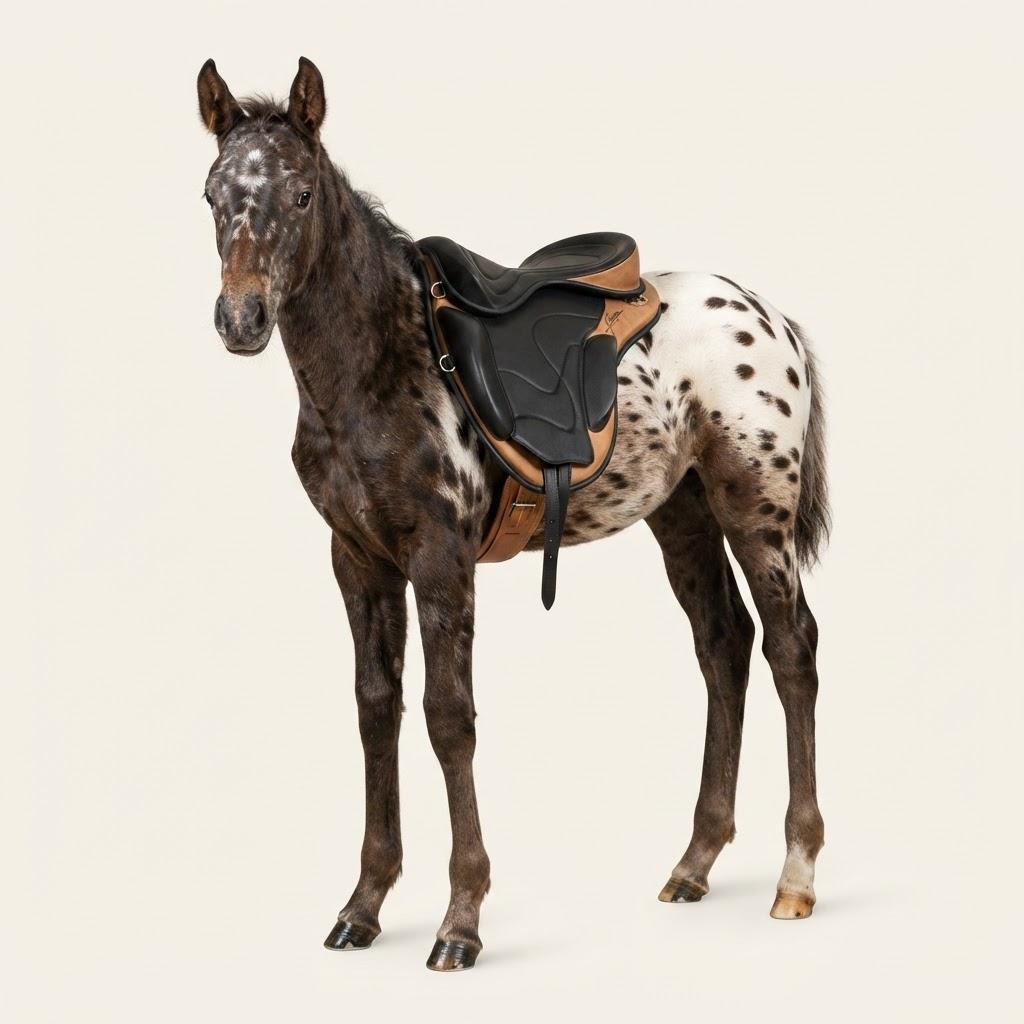
Adaptable over time. The same saddle, photographed on different horses in 2015, 2020, 2025, 2030, as the back changes with age and work.
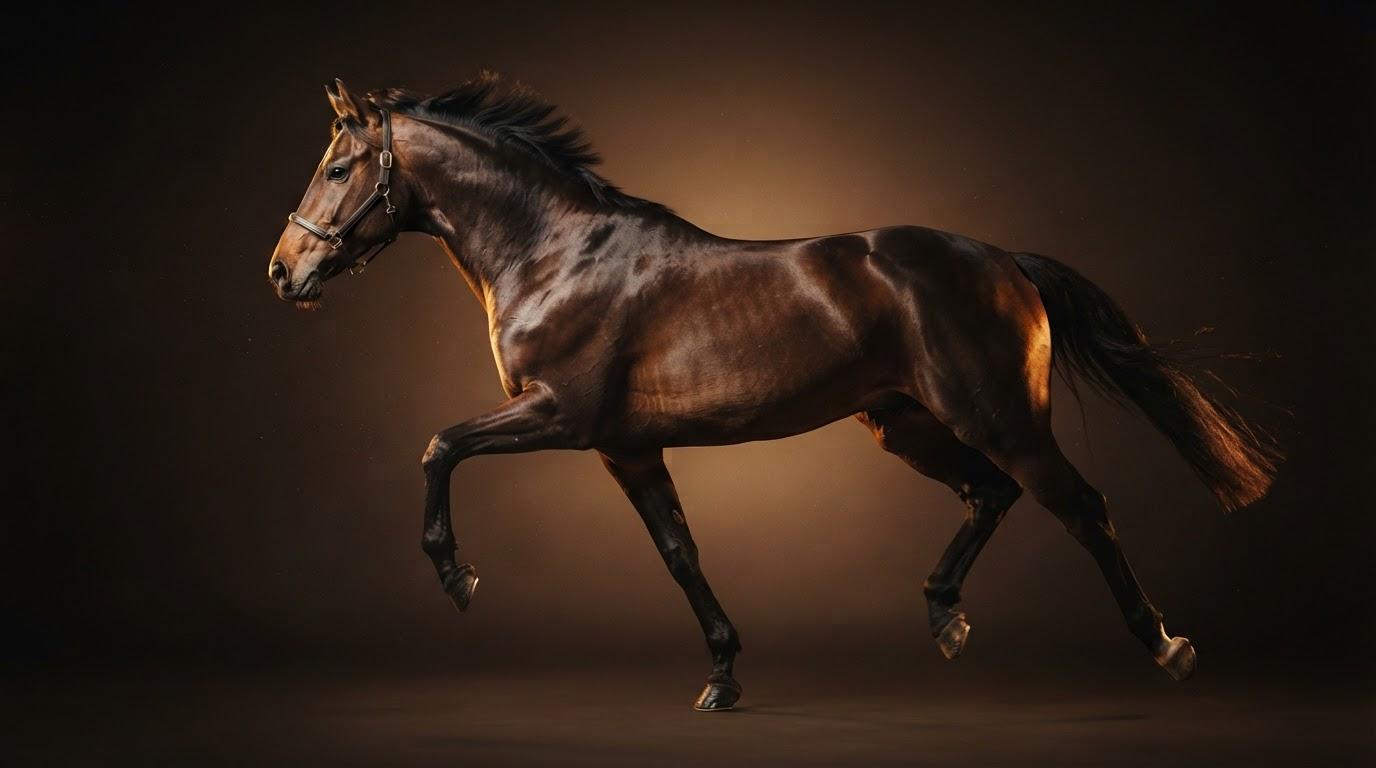
With no tree to pin them, the shoulder blades travel through their full range again, and a pommel that carries no load leaves the horse free to stretch forward. What comes back is a bigger, looser, more natural way of going.
The Freeform gives back the close contact of riding bareback — you can feel the muscles working under the seat — but it sits like a real saddle. The adjustable stirrup attachment takes the same saddle from dressage to the trail to a fence.
You touch a saddle every day, and the material is the first thing you feel. We work three of them — Italian full-grain calfskin, vegetable-tanned leather, vegan microfibre — and they all pass through the same hands, the same cutting, the same stitching. What changes is the character: leather softens and keeps a record of the years, the vegan option comes out of the rain exactly as it went in. What doesn't change is the standard.
Wild Sherry — Smooth calfskin — 1 / 25
The same four stages, read across both families. They have more in common than you would think — and where they part company, we say so.
full-grain calfskin and vegetable-tanned hide
Sympanova technical microfibre
Neither one is impact-free: leather brings an animal supply chain with it, the microfibre is a technical polymer that stays. We set them side by side so the choice is an informed one, not because one is the good version of the other.
Pick a part to see how it works and what you get to choose — then open the configurator and build your Freeform, component by component.
The Freeform base starts as a single block of injection-moulded foam: no rigid tree, but a light, breathable core that flexes with the horse's movement. An aluminium bar seated in the pommel keeps the withers clear without imposing a fixed geometry.
One architecture, many disciplines: trail and working riding, endurance at the top level, classical dressage and natural horsemanship. The Freeform is the saddle chosen by most Tevis Cup winners since 2007.
Tevis Cup · 100-mile enduranceHours in the saddle on ground that keeps changing underfoot. The flexible base follows the back uphill and down instead of bearing on two fixed points, and the close contact keeps you with the horse exactly where the going turns serious.
Fifty or a hundred miles change the shape of the horse while you ride them. With no tree there is no rigid shell to match: the base keeps re-fitting the back as it empties out, gate after gate, and still fits at the last one.
A collected position and clean aids. Your seat bones rest either side of the vertebrae and the moulded seat does not shift under you, while full contact lets every answer from the back come through: the leg can speak quieter, because it arrives sooner.
Working light asks the horse to be able to move all of himself. The shoulder blades run through their full excursion and the non-weight-bearing pommel lets the neck stretch forward, so the aid stays a suggestion rather than a constraint.
The saddle and its leatherwork, close up and in use.
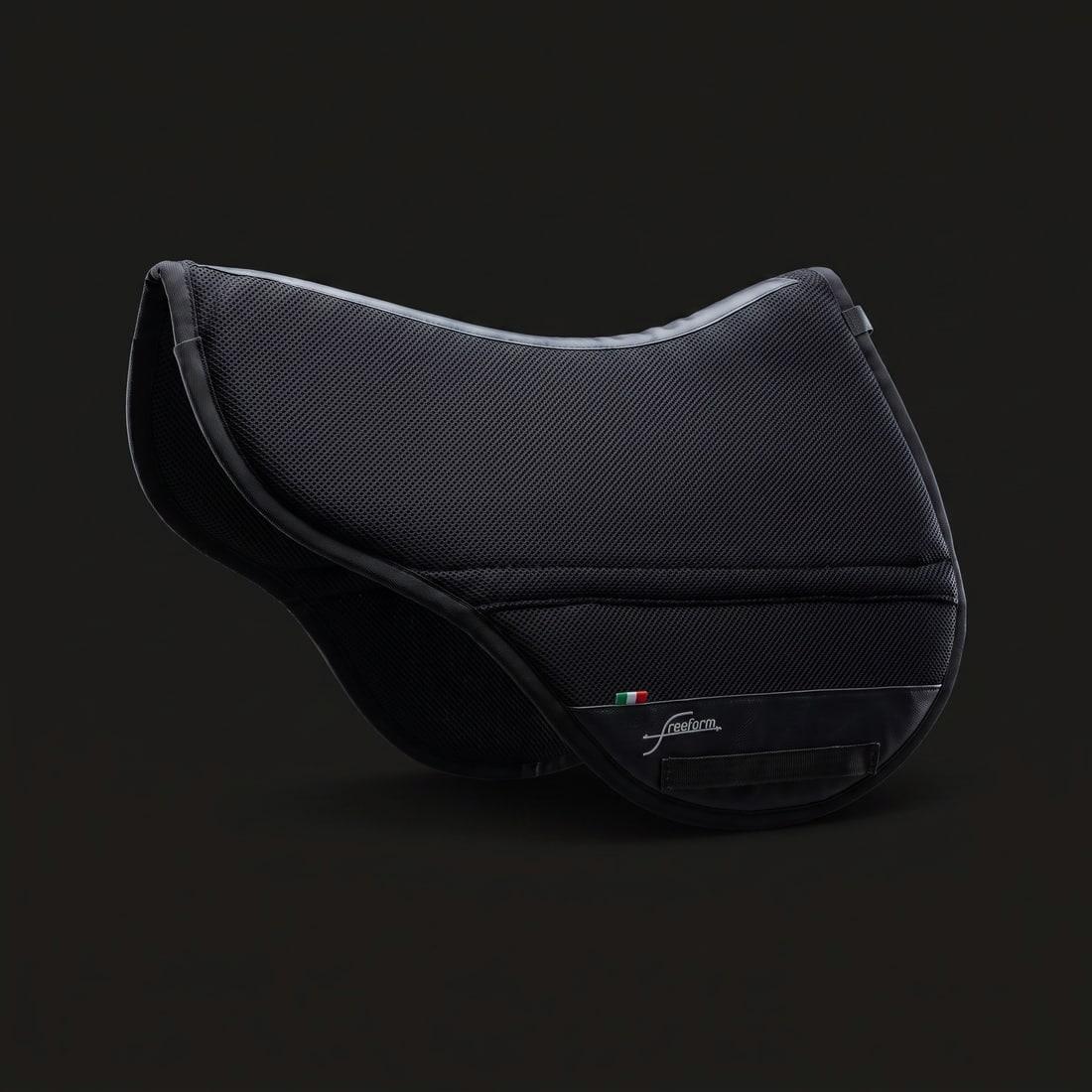
Classic pad. Open-cell foam that lets the back breathe and keeps heat and damp down under the saddle. A hook-and-loop opening to pull or swap the inserts and add shims where they are needed.
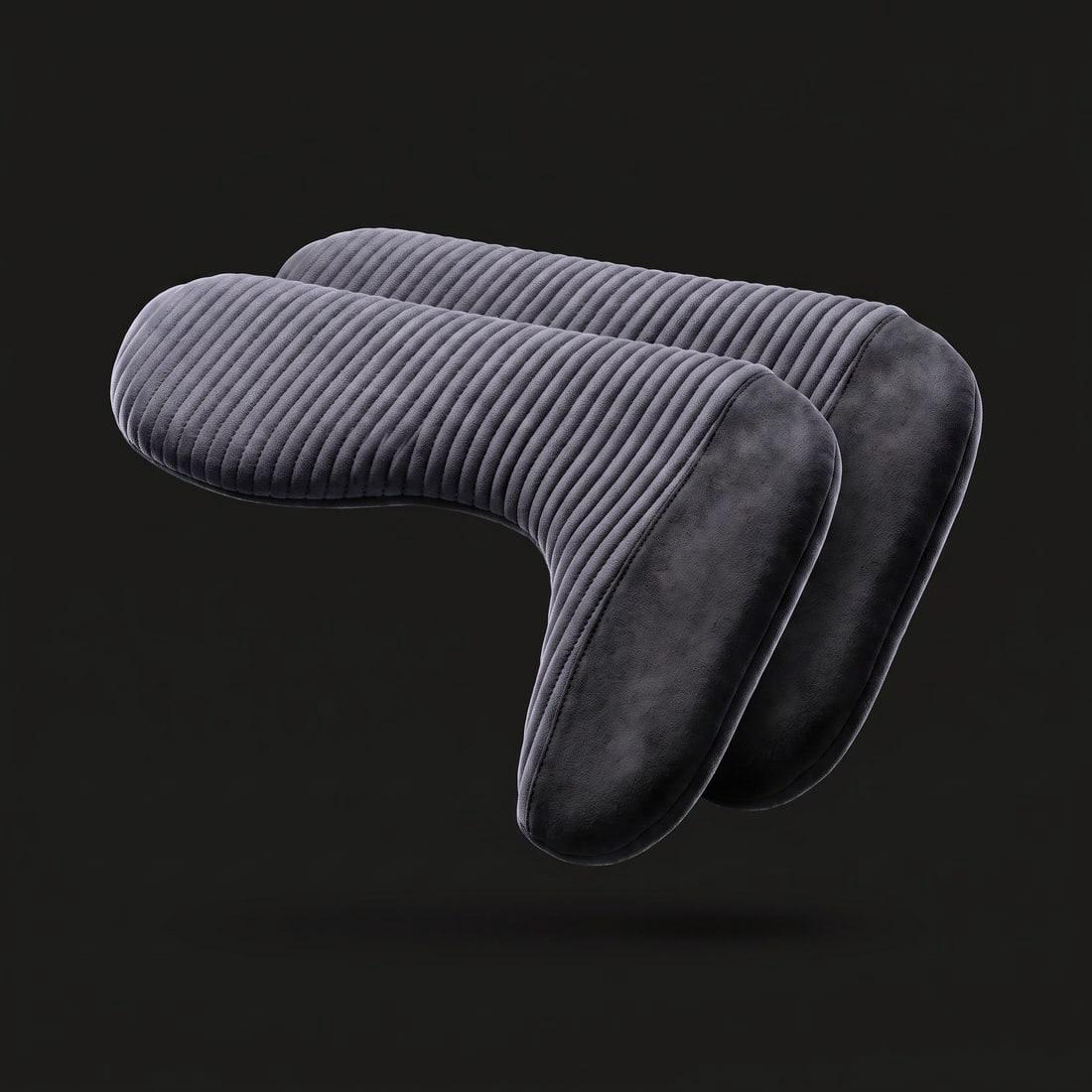
Interchangeable panels. They fix under the shell with hook-and-loop and move where the horse asks: clearance at the withers, room at the shoulders, load spread. The filling changes without a trip back to the saddler.
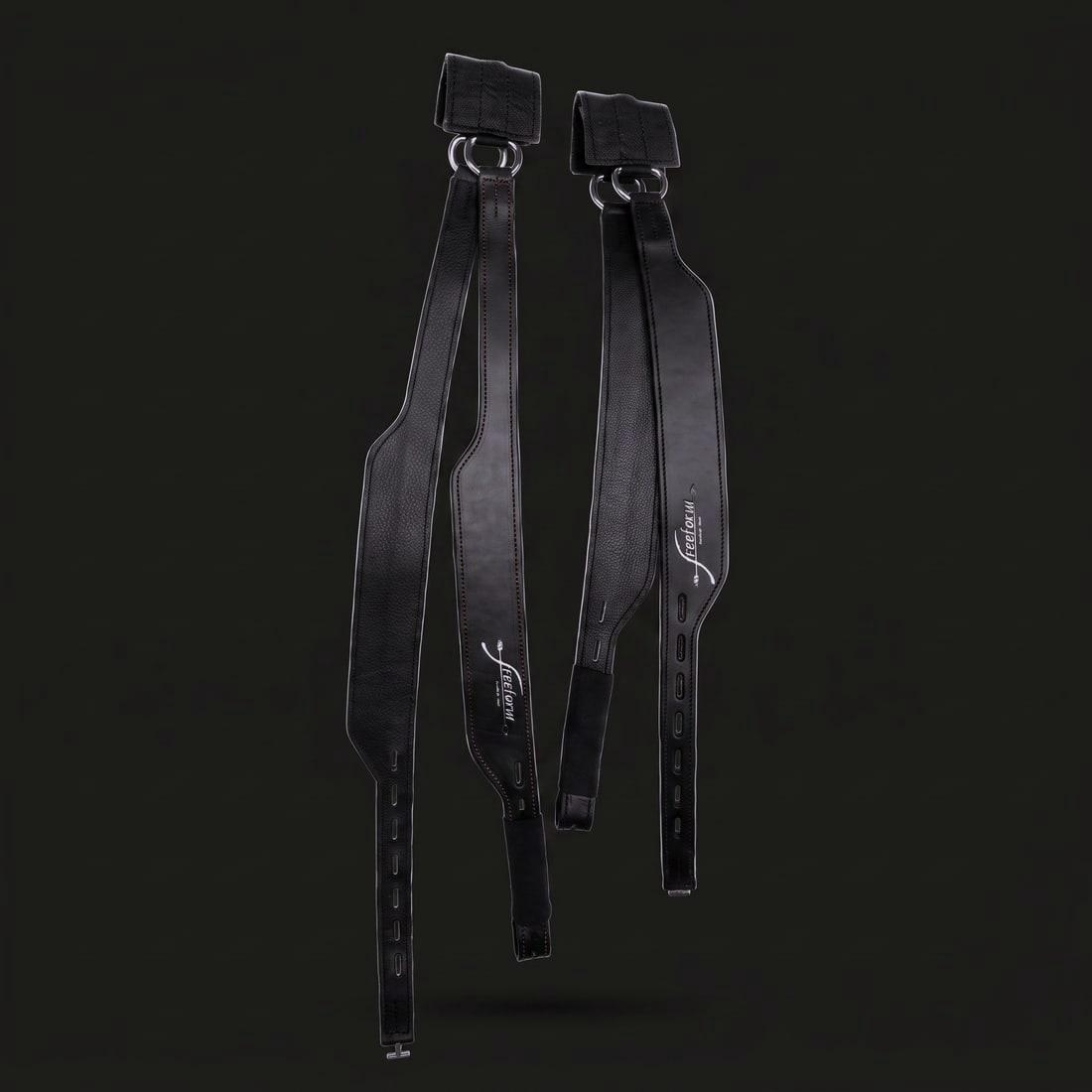
Wave stirrup leathers. Vegetable-tanned leather, shaped in a wave that takes the bulk out from under the leg: the contact stays clean after hours. T-shaped hook-and-loop attachment, adjustable wherever you like it.
Payment
At checkout you can pick Klarna or the instalment plans Stripe offers: the saddle goes into production straight away, the payment spreads out.
Availability and the number of instalments depend on the amount and on the outcome of the application.
Delivery
The saddle travels insured and at no extra cost, tracked from the workshop to the yard.
Warranty
The moulded foam base and the aluminium pommel bar are covered for five years: they are the parts that hold their shape over time, and that is where we put our name.
On top of the 24-month statutory warranty we add five years on the parts that hold their shape over time. It does not cover wear to leather and hook-and-loop.
Advice
Send us the measurements and photographs of the back: we go through the configuration together before it goes into production. If something doesn't add up, we'll tell you.
Everything worth knowing, without weighing down the story.
Measurements and figures are indicative: the final configuration can vary with the choices made and with the fit on the horse. We always recommend a check with an impression pad, or a fitting consultation, before ordering.
No, on two conditions: that it is designed to spread the weight clear of the spine — as the Freeform is, with the rider's seat bones either side of the vertebrae and Y-shaped billets — and that it is used with a treeless pad that has a spine channel and inserts. A plain felt blanket is not enough, because it concentrates the load on the spine. With the right pad, impression-pad testing puts the Freeform among the treeless saddles that spread pressure best.
No. The rider sits just behind the withers, between the 9th and 13th thoracic vertebra, and the seat bones rest either side of the vertebrae, not on top of them. The moulded foam and the pad's channel hold the load clear of the spine: the weight is wrapped around the horse's centre of gravity rather than dropped onto his back.
You need a treeless pad with a central spine channel and removable high-density foam inserts. It is the piece that makes or breaks a treeless set-up: it creates the clearance over the spine and lets you correct muscular asymmetry with shims, under the weaker side, until the horse evens out. We recommend the Freeform pad, or a made-to-measure pad for high withers.
Yes. The flexible base moulds to each horse rather than imposing a fixed shape, so with a dedicated pad the same saddle can follow several horses. It is also why it goes on fitting the same horse as his muscle changes with age and work, with no reflocking.
The seat follows the rider's size (15" to 19", in half sizes: the standard base takes them all, the short bases stop sooner; 40 to 46 cm on the western seats); the length of the base follows the horse's back (22" standard, 20" or 18.5" for short backs). Wither clearance comes as a 9 or 13 cm cutback; on the western line the fork provides it. We always recommend a check with an impression pad, or a fitting consultation, rather than an estimate by eye.
The limit is set by the horse, not by the saddle — and it applies to a treeless saddle exactly as it does to a treed one. The figure most often quoted in the literature is 20% of the horse's bodyweight for trail riding and 17% for endurance, where the hours in the saddle weigh more than the kilos; the sum is (rider + saddle and tack) ÷ the horse's bodyweight, and tack means all of it: bridle, saddlebags, water. These are orientation thresholds drawn from the literature, not Freeform specifications. On the saddle side, heavier riders call for a thicker, denser pad: it is the pad-and-panel system that spreads the pressure clear of the spine. The Freeform has been ridden over 50 and 100 mile endurance courses by substantial riders.
Contact is far closer: you feel the muscles of the back working, as you would bareback but with a better position and more comfort. The Freeform still sits like a real saddle, not like a cushion. In the first few rides many riders notice their leg and seat working harder, and that settles quickly.
Trail and working riding, endurance, classical dressage and natural horsemanship. It has a strong endurance tradition — chosen by most Tevis Cup winners since 2007 — thanks to how it keeps fitting a horse whose shape changes over a long ride. The adjustable stirrup attachment takes you from a trail position to dressage to jumping.
Routine cleaning after every ride and, three or four times a year, a full treatment: wash with a neutral soap, let it air-dry, then a thin coat of balm on leather that is dry to the touch, left to soak in. Every Freeform is built to order by hand in Italy, in roughly 6–8 weeks.
Configure your Freeform component by component, or talk to us about setting it up on your horse.
Handmade in Italy · 6–8 weeks · free shipping