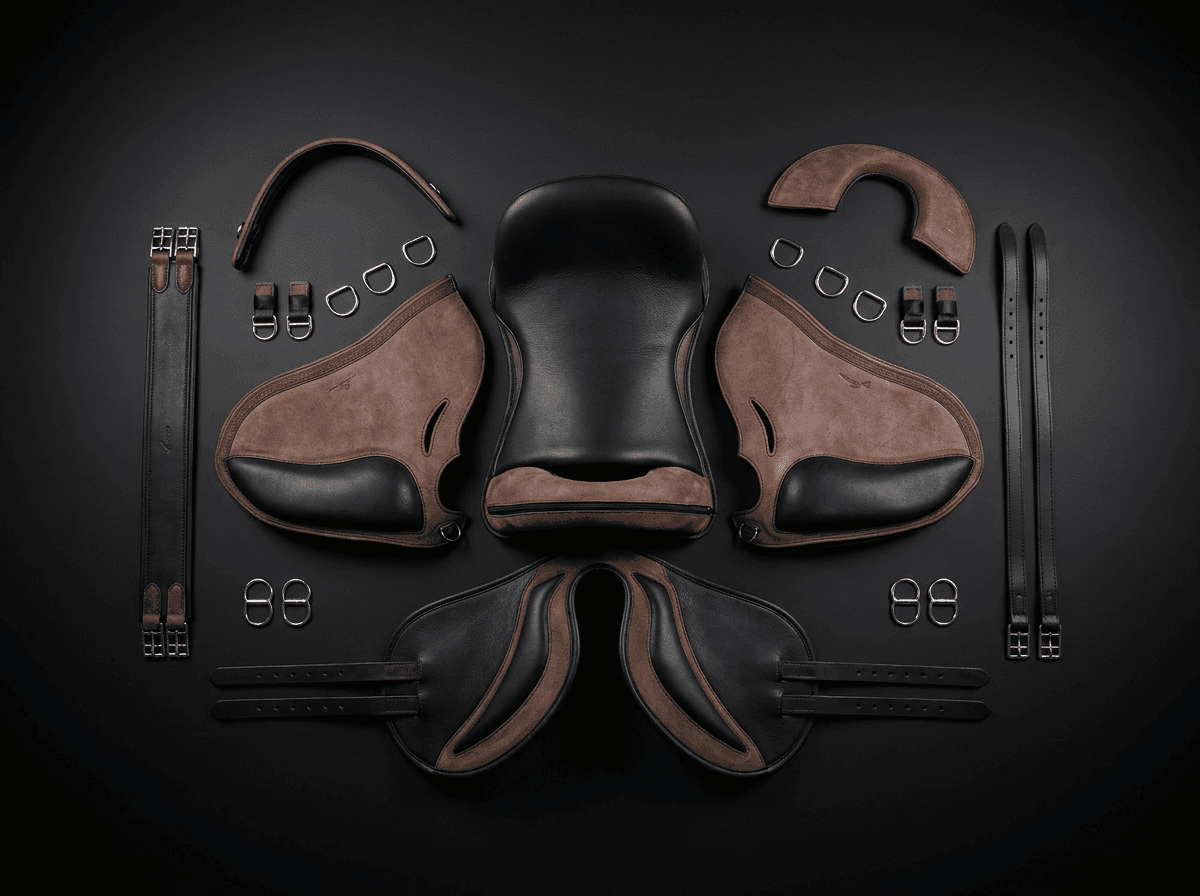
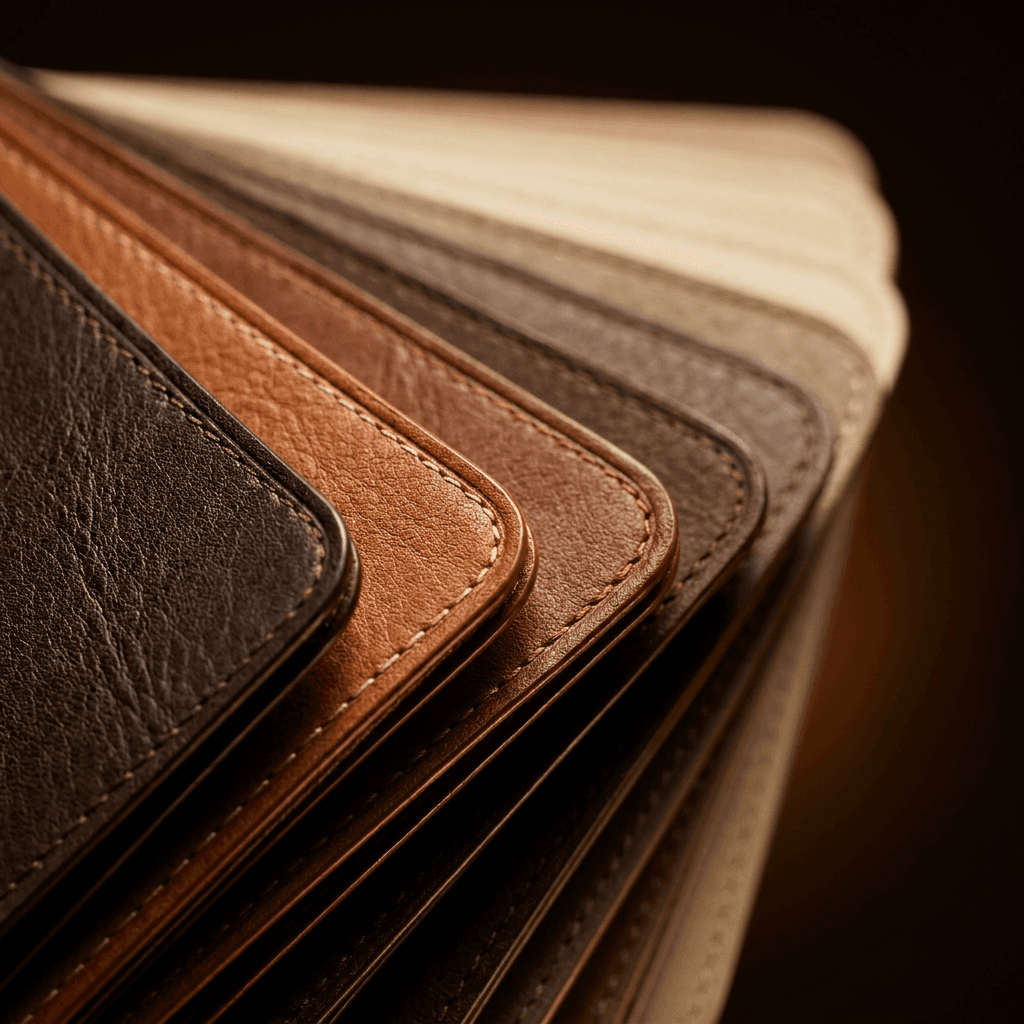
Leather care, season by season
The leather used on the Freeform is a living material: it takes up moisture, it dries, it darkens with time. Regular care is not about making it look new, but about keeping it supple — and it is suppleness that decides how long it will last.
Three different rhythms, three different gestures: daily, monthly, seasonal.
- 1
After every ride — one minute
Wipe a dry or barely damp cloth over the seat, the flaps and the stirrup leathers to take off sweat and dust. Sweat is salty: left to dry on the leather it draws the moisture out faster than anything else.
Wiping a cloth over the seat after a ride - 2
Every month — clean and inspect
A full clean with neutral soap, followed by an inspection of the stitching, the girth straps and the stirrup attachment points. This is the moment to spot a pulled thread before it becomes an open seam.
- Stitching sound, with no threads pulled out
- Girth straps free of cracking or stretch
- Hardware free of corrosion
- 3
Every season — feeding the leather
Three or four times a year, after cleaning, spread a film of balm and leave it to soak in for a few hours before the saddle goes back into use. In summer the leather dries out faster: if you ride a great deal in dry heat, bring the treatments closer together.
A thin film that soaks in properly feeds the leather more than a thick layer sitting on the surface.
Seasonal application of nourishing balm to the leather - 4
A long lay-off — how to store it
Clean and feed the saddle before you put it away, never afterwards. Keep it on a saddle rack in a dry, ventilated room, under a breathable cotton cover — never in a closed plastic case, which traps the damp and invites mould.
- A dry, airy room, away from any source of heat
- A cotton cover, not plastic
- A look at it every couple of months, if only to air it
Saddle stored on a rack under a cotton cover
Do
- A dry cloth after every ride
- An inspection of the stitching once a month
- Feeding the leather before a period of storage
Don't
- Putting the saddle away damp or dirty
- Closed plastic covers
- Feeding leather that is still wet
Questions about this guide
No. Full-grain leather takes on an uneven patina at the points of most contact — the seat, the inside of the flaps, the stirrup leathers. It is normal behaviour for the material, and it tends to even out over time with regular feeding.
Used rarely and in very small amounts it softens the leather, but in excess it weighs it down and reduces its structural strength. For routine care a balanced balm is the better choice.
Still unsure?
Send us a photo: we'll look at your case and tell you how to proceed.
Carry on with
Care
How to clean a Freeform
Stripping it down, cleaning the leather, washing the panels and drying: the full routine that keeps the saddle as it was on day one.
Safety
The safety checks before every ride
Thirty seconds on girthing, stirrups, Velcro and stitching: what to look at, what never to let pass and when to stop.